Table of Contents
Introduction
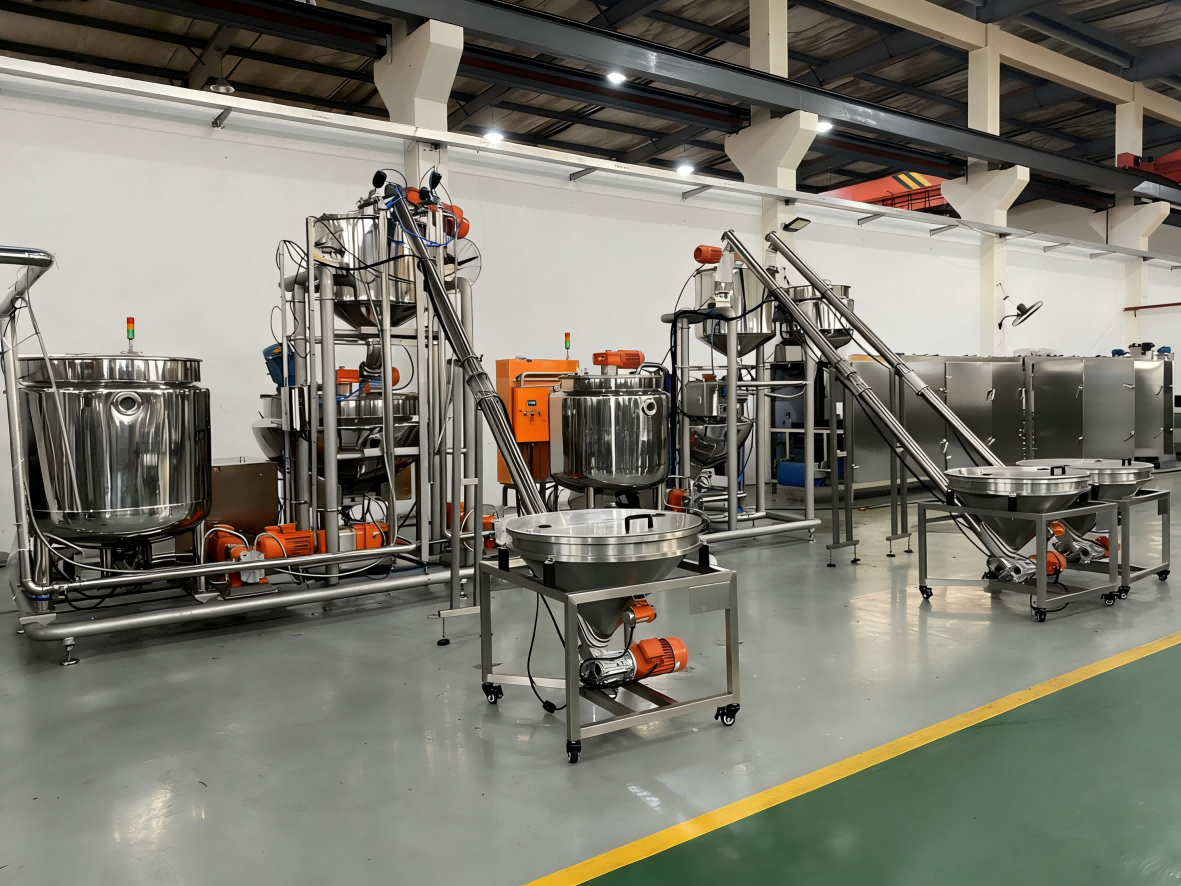
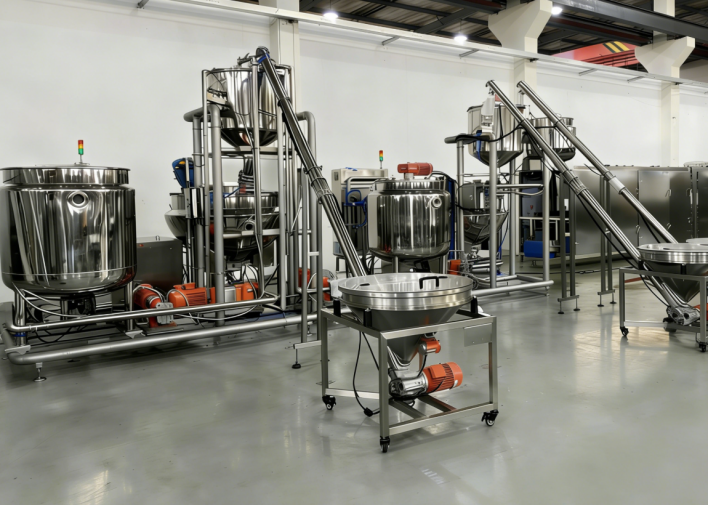
In the competitive world of candy and gummy production, selecting the appropriate mold material for high-temperature jelly pouring is crucial for achieving consistent quality, efficiency, and cost-effectiveness. High-temperature processes, often exceeding 80-100°C, demand materials that withstand thermal stress without deforming, sticking, or contaminating the product. For biscuit and candy gummy factories looking to optimize their lines, understanding mold materials can significantly enhance output. YTjellycandymachine, a leading food production line factory from China, specializes in advanced machinery tailored for these demands, ensuring seamless integration of superior molds into your operations.
Understanding High-Temperature Jelly Pouring
High-temperature jelly pouring involves depositing molten gelatin mixtures into molds at elevated temperatures to form precise shapes before cooling and demolding. This process subjects molds to intense heat, pressure, and repeated cycles, making material choice pivotal. Poor selection can lead to mold degradation, uneven cooling, product defects like bubbles or stickiness, and increased downtime. As factories scale up, investing in durable molds compatible with production lines like those from YTjellycandymachine becomes essential for maintaining hygiene standards and boosting throughput.
Transitioning from traditional methods, modern lines emphasize materials that not only endure heat but also facilitate easy release and cleaning, aligning with food safety regulations such as HACCP and FDA guidelines. This foundation sets the stage for evaluating specific material properties.
Key Factors to Consider
Choosing the right mold material requires assessing several interconnected factors. Thermal conductivity ensures even heat distribution for uniform gelling. Resistance to warping prevents dimensional inaccuracies over time. Non-stick properties reduce the need for release agents, preserving flavor purity. Additionally, food-grade compliance, durability under mechanical stress, and cost-efficiency play vital roles. For high-volume biscuit or gummy factories, materials must support automation, as seen in YTjellycandymachine’s integrated pouring systems that minimize waste and maximize precision.
Following these factors, let’s examine the primary materials available through a structured comparison.
Common Mold Materials Comparison
To aid decision-making, consider the following table outlining key mold materials, their properties, and suitability for high-temperature jelly pouring:
| Material | Thermal Resistance (°C) | Non-Stick Properties | Durability (Cycles) | Cost Level | Best For |
|---|---|---|---|---|---|
| Silicone | Up to 250 | Excellent | 10,000+ | Medium | Flexible shapes, easy demolding |
| Stainless Steel | Up to 400 | Good (with coating) | 50,000+ | High | High-volume production |
| Aluminum | Up to 300 | Fair | 20,000+ | Low-Medium | Quick cooling applications |
| Polycarbonate | Up to 150 | Moderate | 5,000+ | Low | Prototyping, low heat |
This table highlights how silicone and stainless steel dominate for demanding environments, offering a balance of performance and longevity.
Pros and Cons of Top Materials
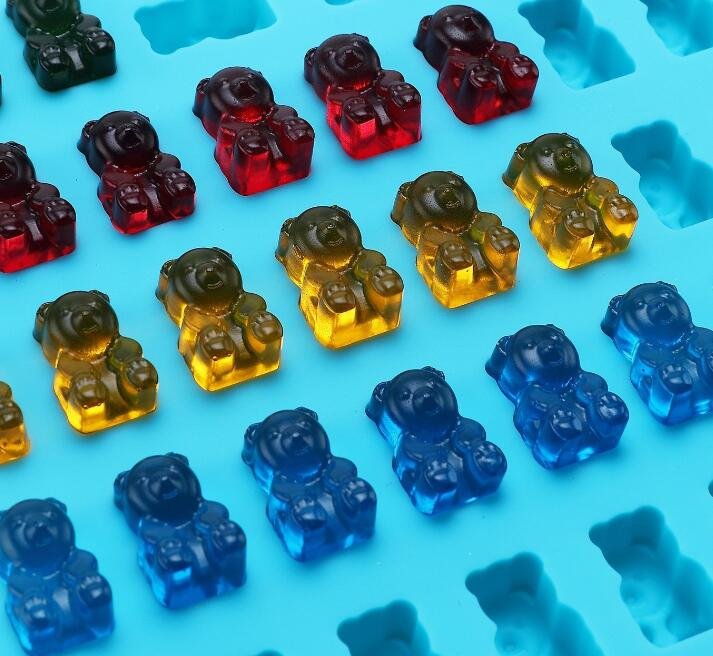
Delving deeper, silicone molds excel in flexibility, allowing intricate designs without breakage, ideal for gummy bears or creative shapes. They resist thermal shock and clean easily, reducing cross-contamination risks. However, they may absorb odors over time if not maintained properly. Stainless steel provides unmatched robustness for YTjellycandymachine production lines, handling extreme temperatures and frequent sterilization via autoclaving. Its downside is higher upfront cost, offset by longevity in 24/7 operations.
Aluminum offers rapid heat transfer for faster cycles but requires coatings to prevent adhesion. Polycarbonate suits smaller runs but falters in sustained high heat. Weighing these against your factory’s volume guides optimal selection.
Best Practices for Selection and Maintenance
To maximize mold performance, follow these essential guidelines:
- Match material thermal expansion to your pouring temperature to avoid cracks.
- Prioritize FDA-approved, non-porous options for sanitary conditions.
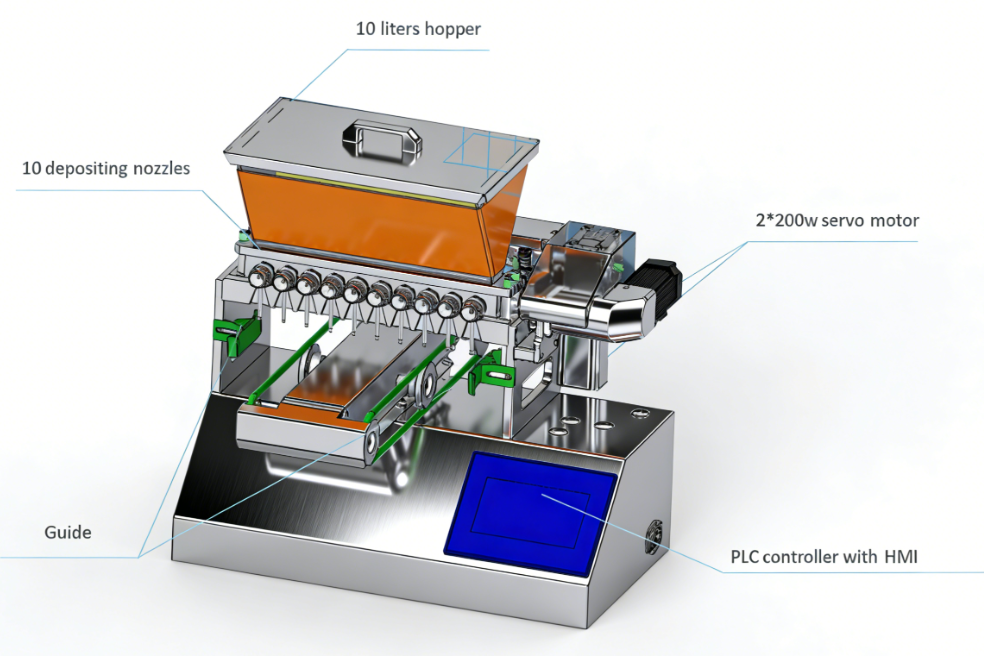
- Test compatibility with YTjellycandymachine depositors for precise filling.
- Implement regular inspections for wear, using ultrasonic cleaning for longevity.
- Consider hybrid molds combining silicone flexibility with steel durability for versatility.
These practices ensure molds integrate flawlessly, transitioning operations toward efficiency. Factories upgrading to YTjellycandymachine lines benefit from customized mold recommendations, enhancing ROI.
Integrating Molds with Production Lines
Seamless mold integration demands compatibility with automated pouring, cooling tunnels, and demolders. YTjellycandymachine excels here, offering lines where molds snap into place for rapid changeovers. For biscuit factories diversifying into gummies, this modularity cuts setup time by 50%. Pairing high-grade molds with precise temperature controls prevents defects, ensuring glossy finishes and consistent weights.
Moving forward, pair material choice with supplier expertise. YTjellycandymachine provides molds engineered for their machines, guaranteeing synergy.
Conclusion
Selecting the right mold material for high-temperature jelly pouring transforms production challenges into opportunities for excellence. By prioritizing thermal resistance, non-stick qualities, and durability—while leveraging tools like comparison tables and best practice lists—biscuit and candy gummy factories can elevate quality and efficiency. YTjellycandymachine stands ready as your partner, delivering production lines and molds that embody these principles for sustained success in global markets.
Last Updated on April 4, 2026 by YTjellycandymachine